In this story
On 10 July 2026, Tagi. opened its first overseas directly operated space, Tagi. Sabaai House, in Bangkok.
The store is in centralwOrld, in the city’s Ratchaprasong shopping district. The mall brings together more than 500 local and international brands and attracts residents and tourists alike. Tagi. has to speak to both groups while establishing a recognisable presence in a crowded retail environment.
Founded in 2019 and based in Shanghai, Tagi. takes its name from “Timely Access of Gripping Imagination.” It began with cups, bags and storage products before expanding into clothing, stationery and pet supplies. Colour, form and original characters give everyday objects an easy, playful quality.
Sabaai conveys ease and comfort in Thai. The store’s concept, “Weaving a Home in Bangkok,” brings bamboo, timber, plants, textiles and original characters into a shared domestic setting.
A Tagi. house told in Bangkok’s language
Sabaai House does not depend on one spectacular central installation. Wooden entrance grids, bamboo frames, recesses, mirrors and low display units create a home that unfolds in layers. Repeated frames, shelving and cabinets connect different product categories through the same spatial vocabulary.
Tagi. commonly calls its stores “houses,” with a Chinese name that echoes the brand’s pronunciation. Starting with the first house in Shanghai, stores in different cities have acquired their own names and stories. Sabaai House takes that language abroad for the first time.
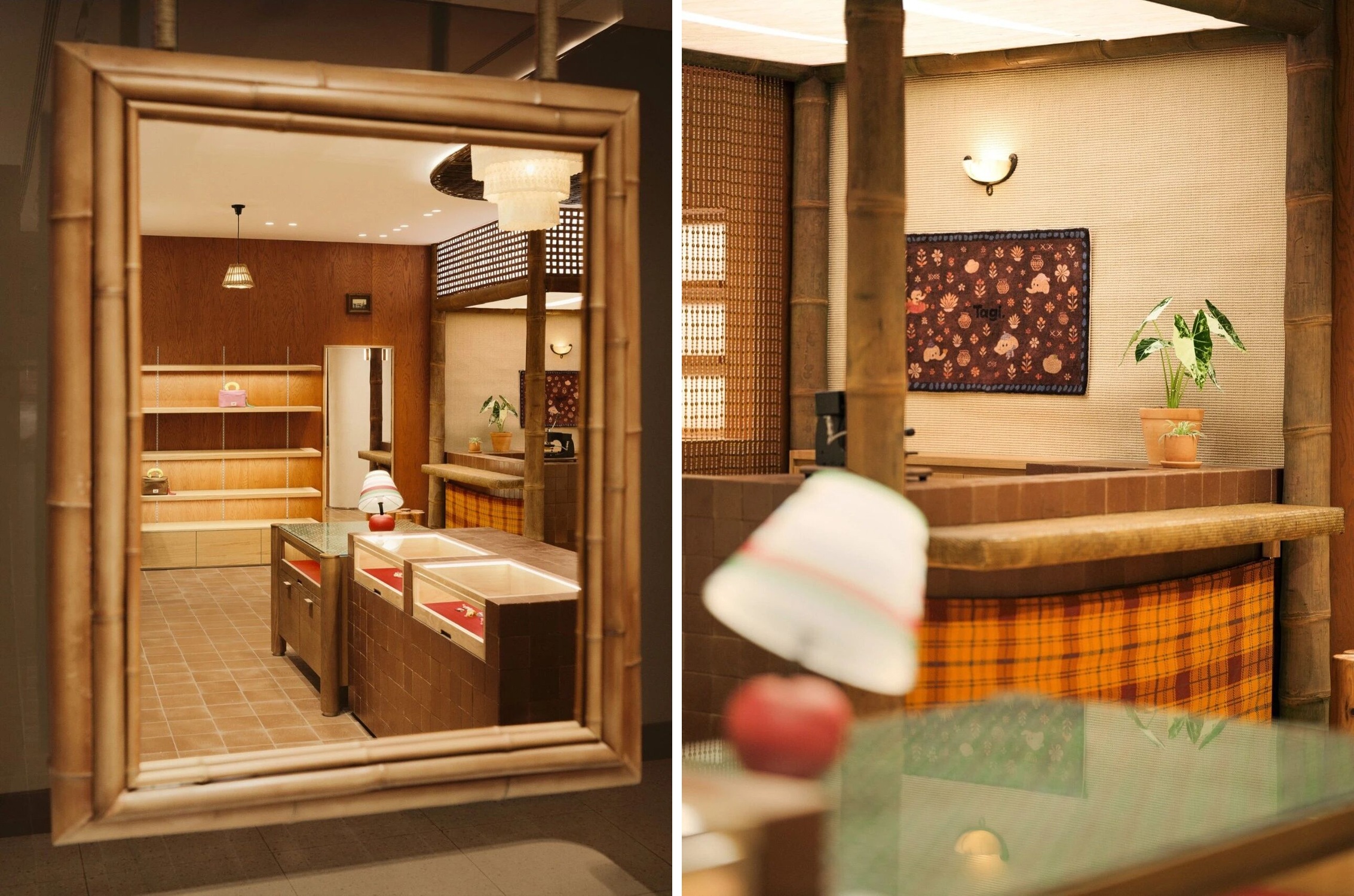
From the mall corridor, black lettering sits directly on a horizontal timber grid. Reddish-brown tiles extend inward from the entrance, marking a boundary while the open frontage reveals shelves, light and colour. Visitors can sense the depth of the space before entering.
Inside, bamboo and timber frames recur around mirrors and display windows, then become the edges of recesses, shelves and cupboards. The same forms move from the entrance to walls and corners.
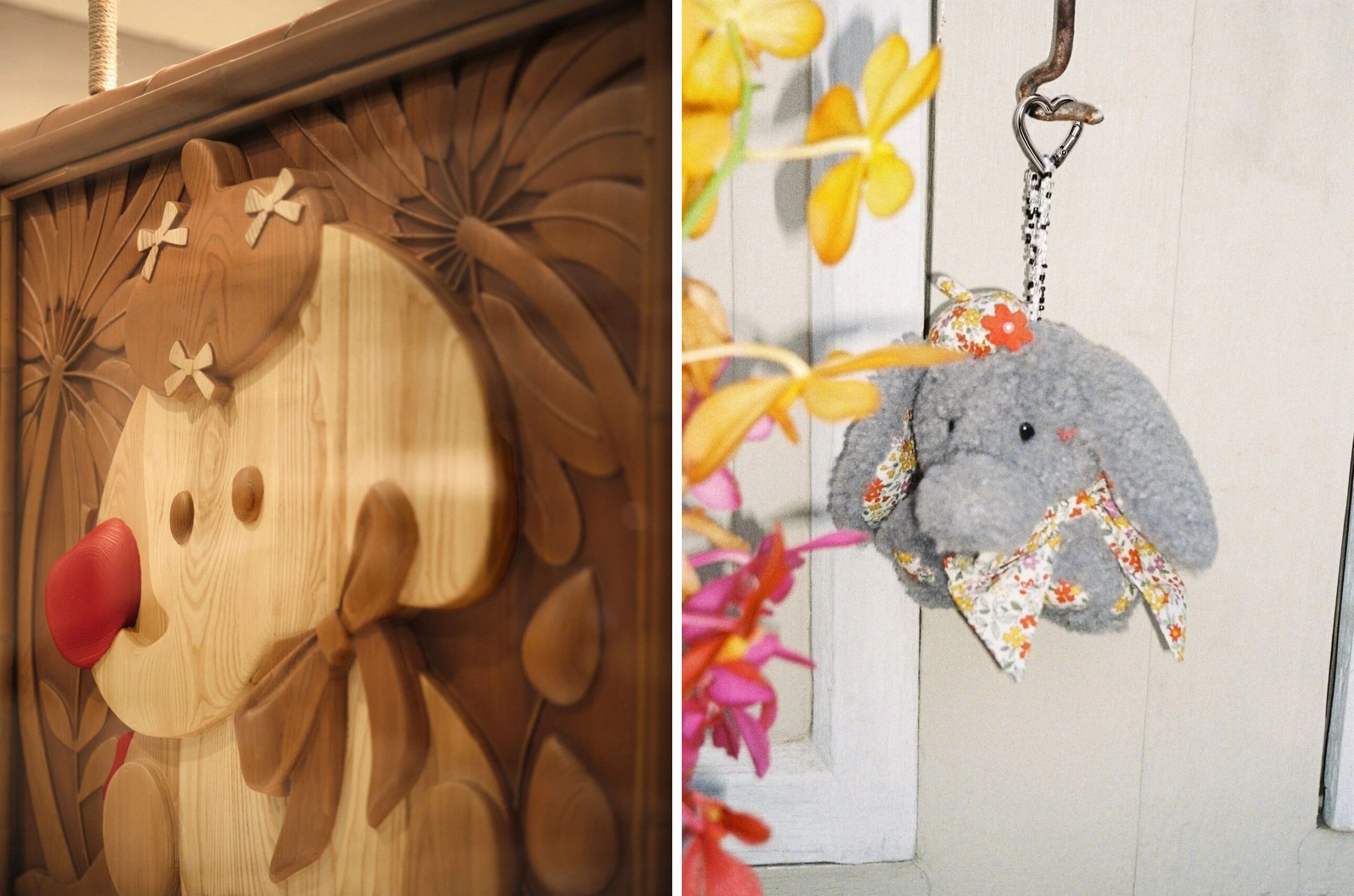
In an entrance-side window, a wooden Elly character sits among leaves and flowers. It is integrated with the timber’s texture rather than isolated from the interior. The brand story begins in view of the mall corridor.
Frames also guide looking. Turning a corner reveals another arrangement of shelves and tables through a bamboo border. Mirrors deepen sightlines; low furniture avoids blocking them. Instead of dividing the store with continuous walls, the frames distinguish groups of products while keeping them connected.
Bamboo joints and wood veneer form the main structure. Terracotta-coloured floor tiles, green wall tiles and floral textiles add local colour, while lamps, pictures and plants sit among the furniture. Patterns of flowers, animals and transport introduce more specific Bangkok references. Curtains soften and divide the harder surfaces of shelves and walls.
The narrative does not displace retail function. Cups, bags, storage items, plush objects and lifestyle accessories still occupy the main displays. Recesses group products and low units preserve views to shelves behind. Materials and movement organise the categories rather than constructing a scene detached from merchandise.
The point is not bamboo or timber by themselves. It is that different categories can arrive in Bangkok and still feel as if they belong to the same Tagi.
Elly carries the story into the city
Elly appears as wooden decoration, plush charms and a large tuk-tuk installation. Moving between media, the character makes “settling in Bangkok” a story that can be seen, carried away and shared.
The pink elephant is an original character created for the Thai market. In the brand’s story, Elly receives a “Sabaai Signal” from Bangkok and travels there out of curiosity. Encountering the city’s energy and freedom, Elly decides to stay. Sabaai House becomes the character’s new home.
The story connects the character’s arrival with the store’s name. Wooden versions enter the walls and windows; plush charms turn the narrative into a product people can buy and take with them.
During the opening, a large pink elephant travelled through Bangkok’s commercial districts and streets on a tuk-tuk. Thai actors Teetee and Baipor also visited the store. Retail, city transport, local personalities and social content became parts of the same account.
The wooden version creates recognition in the store, the charm becomes merchandise, and the large installation supports the opening. The brand does not invent an unrelated theme for each touchpoint.
A home gives different categories a shared context
Sabaai House uses the idea of home to connect products, characters, editorial content and references to Bangkok. Its first overseas directly operated store can therefore offer a relatively complete introduction to the brand.
Multi-category lifestyle businesses face a recurring retail problem. Cups, bags, storage, clothing, stationery and pet products belong to different situations. Arranged only by stock-keeping unit, they can resemble unrelated goods.
Here, the shared domestic context comes first. Objects sit in recesses, on low cabinets and among textiles and characters. Timber frames do more than divide shelves; they connect different uses into one presentation. The interior helps explain why these categories belong under one brand.
Founder Duanduan says the brand hopes to bring an imagination of everyday life to different places. On entering a city, it listens to the culture and rhythm there, allowing Tagi. to grow again and create a locally specific story.
This is localisation at the level of expression. Tagi. retains its colours, characters and category structure, while adjusting the name, materials and character narrative for Bangkok.
Sabaai House was not the brand’s first contact with Thai consumers. A temporary retail project in Thailand in 2025 had provided an earlier round of encounters and observation. Roughly a year later, a directly operated store brought it to centralwOrld.
A temporary space can concentrate an introduction into a short period. A permanent store requires assortment, inventory, display, service and content to work together every day. It also gives landlords and channel partners a fuller view than an online page.
Opening the store does not in itself establish successful localisation. The original brand expression is visible; whether its products and operation fit Bangkok depends on sales, repeat visits and consumer feedback over time.
The first overseas store as a minimum complete unit
Why invest in a physical store when social media and e-commerce can already reach consumers abroad?
In Brandstar’s earlier research with 100 decision-makers at companies expanding overseas, improving brand strength and localising the brand emerged as shared difficulties. Chinese brands are moving from remote reach through platforms, e-commerce and advertising towards a combination of online and physical participation in local markets.
Online channels are efficient. Short videos, social posts and product pages can reach customers quickly and make cross-border transactions possible. But they can also compress a brand into an image, a video, a price and a few reviews. A consumer may buy a product without fully understanding the brand.
Physical stores add another layer. People see products together, touch materials, hear the space, and meet staff and other shoppers. The store explains products and gives a sense of the life they are meant to enter. For a lifestyle business, the relationship between objects is part of the offer.
Brandstar has described an overseas store as an exhibition that runs 365 days a year. Its audience includes buyers, distributors, property operators and prospective partners as well as consumers. They can observe the range, pricing, visitors and real responses before deciding whether the brand might work elsewhere.
The first overseas store can be understood as a brand’s “minimum complete unit.” It need not be the largest, but it should answer three questions in one place: who the brand is, why it has come, and what relationship it hopes to build locally.
For a brand in the earliest stage of overseas development, store count need not be the first priority. One location can bring products, pricing, display, service and content together, giving customers a complete experience, partners a visible basis for judgment, and the brand genuine feedback with which to keep adjusting.
Translated from Brandstar and edited for clarity for an international readership. The reporting, quotations and time references reflect the original article, published 17 Jul 2026. English edition: 5 Sept 2026.