In this story
In summer 2026, Walmart’s Chinese print publication Jiandan Bao—translated here as The Simple Paper—reached its second issue.
The theme moved from spring’s matcha season to yaoshi tongyuan, the Chinese tradition that understands certain ingredients through their uses in both food and medicine. Available free in Walmart stores, the publication differs from a conventional supermarket promotion. It begins with ingredients’ histories, origins, processing and development, asking how a product reaches a shelf and how it can then reach a family table.
The first issue’s editorial set out an interest in the less simple stories behind fresher flavours, shorter ingredient lists and more straightforward ways of preparing food. The plain language presents a different kind of Walmart: something like a helpful neighbour who knows where ingredients come from and is willing to share a few good ways to cook them.
Why make a newspaper when information is becoming shorter and faster? Why visit farms and factories to document complicated processes? Media and business models change, but the need for depth does not disappear. People still value places, people and context, and understanding that outlasts a trending topic.
Brandstar sees editorial, documentary and curatorial capabilities moving inside brands. By organising ingredients, origins, craft, research and flavour into a complete publication, The Simple Paper turns the promise of Walmart’s private label Wojixian—roughly, “simplicity for freshness”—into something a customer can read.
Bringing traditional ingredients into present-day life
The second issue tackles a more difficult subject than matcha. Yaoshi tongyuan connects traditional Chinese food culture with contemporary interest in ingredients, seasonality and everyday diets. It can easily become an obscure historical investigation, or slide into vague promises about health.
The publication takes a relatively restrained route, breaking the subject down into places and processes that people can see, taste and understand. Its treatment is cultural and culinary; the tradition itself should not be read as proof of medical efficacy.
A short history moves from the legendary herbal investigator Shennong and the materia medica of Li Shizhen to modern researchers in laboratories. Origin files visit growing regions. Workshop reports follow raw materials into finished products. Everyday-life proposals bring the knowledge back to meals.
One story considers how huangjing, or Polygonatum rhizome, passes through the traditional method of repeated steaming and drying in a modern workshop. Another looks at how research into turmeric informs a grain-biscuit recipe. Historical practice, laboratory knowledge, production and current eating habits enter the same narrative.
A food calendar based on China’s 24 solar terms accompanies the issue. For July’s period of major summer heat, for example, it suggests brewing aged citrus peel. Such prompts reconnect food with season, flavour and bodily experience. Tradition returns to use rather than remaining a symbol to be admired at a distance.
Making a private-label promise understandable
By the second issue, the editorial structure and voice are becoming clearer. The cover continues an archival visual approach rather than familiar supermarket arrays of products and saturated promotional colours. Transmitted-light photographs reveal the internal structures of sliced lotus root, sour jujube seed, citron, ginger and fingered citron. Familiar ingredients become slightly unfamiliar, like specimens in a botanical atlas.
The restrained layout and use of space evoke a lifestyle magazine. Some social-media responses expressed surprise at Walmart’s visual taste. Once communication extends beyond prices and product facts, a supermarket can also become a place for observing food and understanding daily life.
“Dear neighbour, we meet again,” the second issue’s cover says. The publication has addressed readers as neighbours from the beginning. It talks about ingredients like a friend sharing a recent discovery; it explains where food comes from; and it translates factory and development work into ordinary language.
That neighbourly quality fits retail’s everyday role. People meet Walmart through grocery shopping and cooking. The paper does not elevate that relationship into something grander. It adds useful knowledge at the moment of choosing a product.
An approachable tone, however, requires substantial work. Before a product reaches a shelf, there are choices about origins, raw materials, suppliers, formulation, processes and quality control. Consumers see the result, but not necessarily the judgments behind it. A few quality-related numbers on packaging cannot carry the whole account.
The editorial team brings part of that backstage work into view through visits to growing regions and factories, sourcing investigations, buyer interviews and ingredient research. Product origins and preparation cease to be entirely hidden behind the shelf.
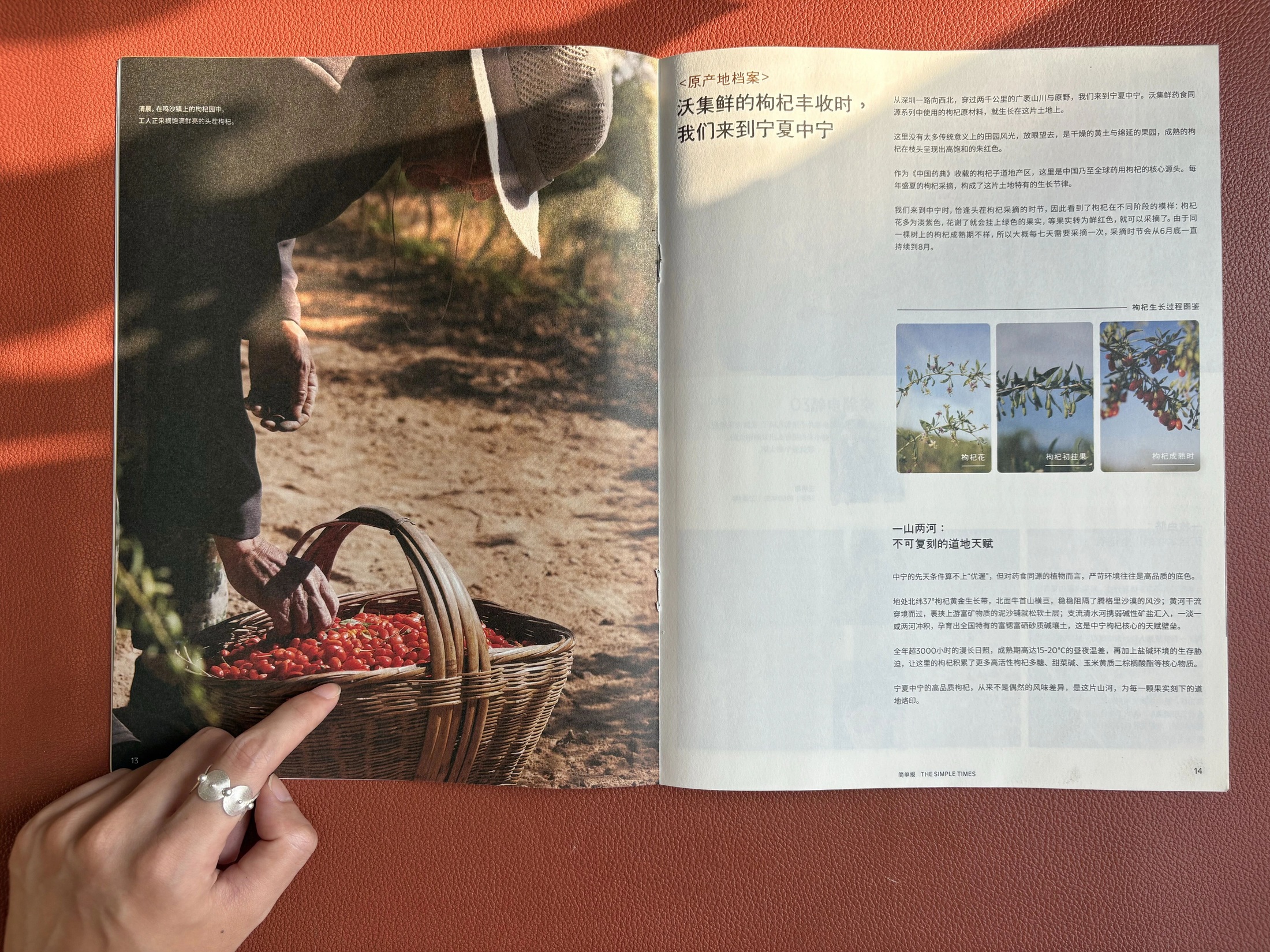
This fits a proposition Brandstar has previously explored: content can become a product’s “second form.” The publication turns selection logic, supply-chain capabilities and quality standards into something people can read, understand and retell.
It translates both the supply chain’s specialist language and an abstract quality promise into specific processes a reader can examine.
Other brands are developing editorial capabilities too. Xiaohongshu’s about publication organises individual community experiences around themes such as work choices, gatherings and observing nature. Pop Mart’s play/GROUND starts from specific situations, including disconnecting from phones and changing social rules, to document how younger people live and play.
These projects seek a sustained editorial perspective, recurring subjects and a publishing rhythm, rather than supporting material for a single campaign.
When the story returns to the store
The Simple Paper’s distribution is part of its meaning: customers first encounter it free in actual Walmart stores.
In some locations it appears alongside a curated display of products related to the food-and-medicine theme. A reader can follow a line from ingredient knowledge to product choice, understanding how something might reach the table.
Walmart used catalogues, leaflets and newspapers before the internet. This publication is not simply a return to those media. Promotional sheets answer what to buy and how much it costs. The Simple Paper asks where food comes from, why it is made in a particular way and why it might merit a place in someone’s basket.
Paper no longer has to deliver the fastest information. In a highly digital, fragmented environment, it regains value as something complete, tactile and possible to keep.
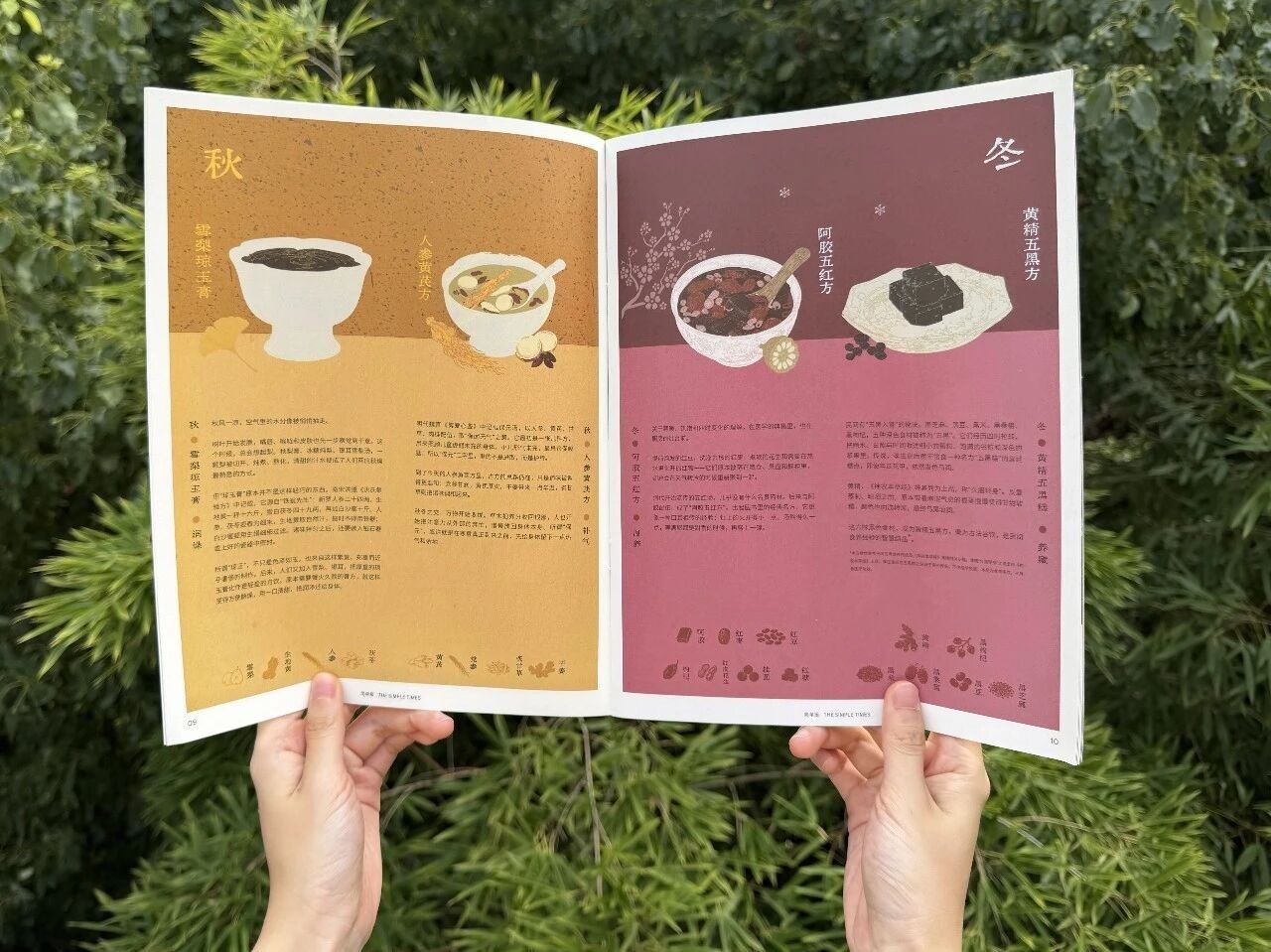
When publication and product share a setting, a customer can read about an ingredient’s origins and then find it on the shelf. The newspaper can also travel home and be read at the table. Content enters shopping routes and personal routines rather than sitting apart from consumption.
The store remains a place of transaction, but also becomes a place to understand products and encounter a brand’s perspective. Editorial display and product display connect two ideas: content as a product, and space as a medium for narrative.
Turning successive issues into a lasting narrative
The first issue covered matcha and the second a tradition of ingredients used in food and medicine. The subjects change, but the underlying question remains: what complicated work makes simplicity and freshness possible?
A stable premise, recurring sections, fieldwork and store distribution move the newspaper beyond a one-off brand publication towards an editorial operation. It accumulates a way to observe food, organise knowledge and explain products.
An advertisement commonly explains what a product is. The Simple Paper also tries to explain how Walmart understands food, life and consumer choice. A lasting narrative need not repeat the same sentence. It can keep providing new facts, people and details along a consistent line of inquiry.
Depth cannot replace the product experience. If the quality described in the paper differs from what customers buy, a fuller story may make the gap more visible. Trust can accumulate only when ingredients, prices, taste and everyday experience support the account.
Readers may forget the details of an individual issue but gradually develop confidence in the private label. That is the commercial value the content hopes to earn. In this sense, simplicity means the brand doing the complicated work of sourcing, development, procurement and quality control, then leaving the customer with a clearer and easier choice.
Translated from Brandstar and edited for clarity for an international readership. The reporting, quotations and time references reflect the original article, published 23 Jul 2026. English edition: 5 Sept 2026.